

マンション茶室 Apartment Tea Room
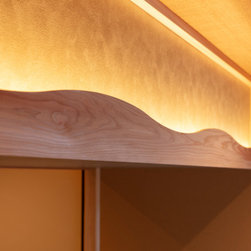
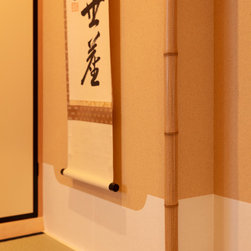
最近マンションにお住まいの方からの茶室ご依頼が多くなってきました。一般的に現在のマンションには和室がなく、個室2部屋にリビングダイニングキッチンのいわゆる2LDKが主流です。そんななかでもお茶に関心のある方は工夫してリビングに畳を敷いたりしてお茶のお稽古をしております。本格的な茶室とは言わないがせめて落ち着いた和室がほしいとの要望です。マンションの場合は間仕切り壁は構造に絡まないので簡単に取れますが、構造の柱型や梁型は取ることができず意匠設計の障害になっております。特に梁型は大きく天井高も厳しいのが現状です。ただそれを逆手にとって変形の8畳や4畳半、さらに下り天井のデザインなど工夫次第では面白い茶室にもなりますので、茶室建築家としての腕の見せ所でもあります。笑
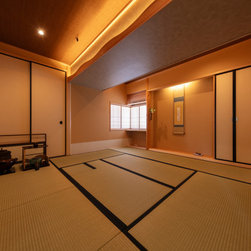
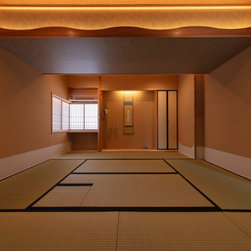
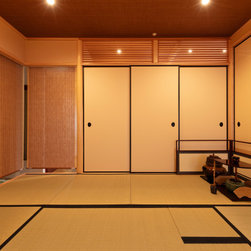
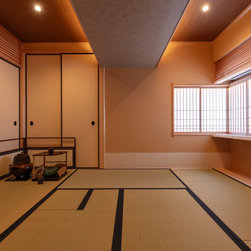
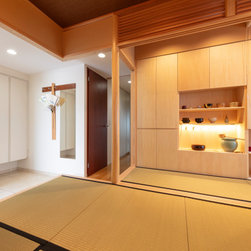
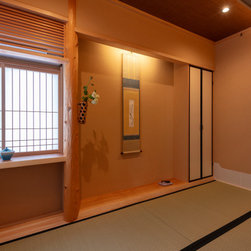
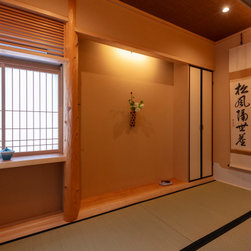
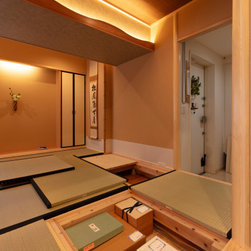
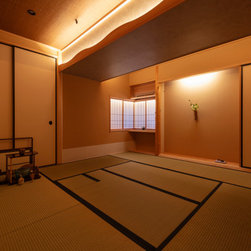
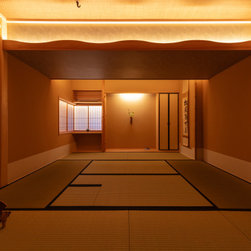
直近で設計した茶室は、お稽古をするのでどうしても8畳の茶室がほしいとの要望でした。
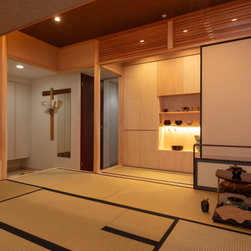
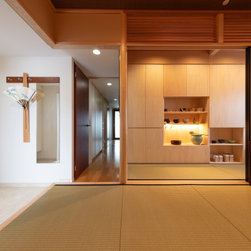
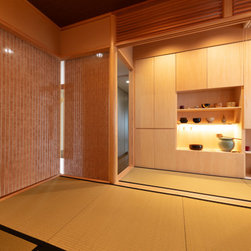
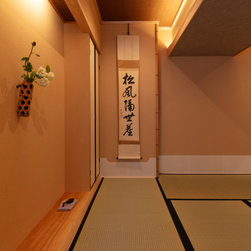
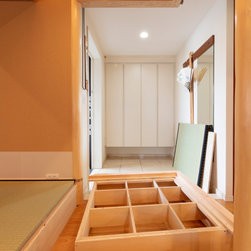
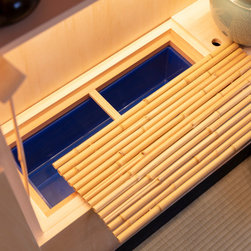
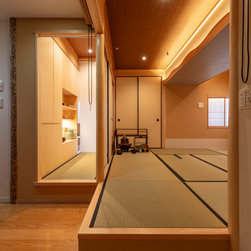
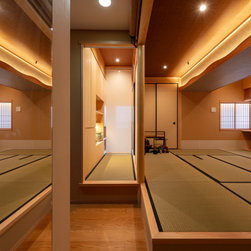
お稽古場として茶室を考えている先生方にはやはり8畳広間が必要です。今回は玄関ホールが広かったので廊下まで茶室を張り出して、緊急時には一部畳床が取り外しできるようにしました。また水屋には給排水がないので、置き水屋的発想で床下に排水桶が置けるようにしております。
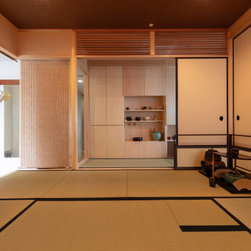
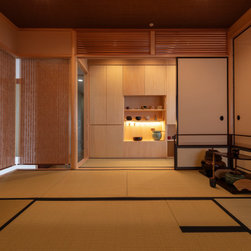
茶室の場合、道具の収納も重要ですので、床下は全て畳を上げて収納できるようにし、壁面もできる限り収納としております。
さらに、茶事ができることが茶室の基本でもありますので、リビングを待合にして、バルコニー経由で露地を想定して水屋の一部を通り、席入りの導線も確保しての茶室です。
将来的にはバルコニーにつくばいや本格的な露地を作ることも可能です。
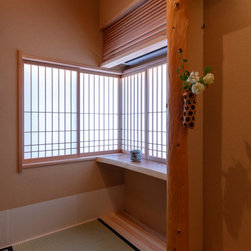
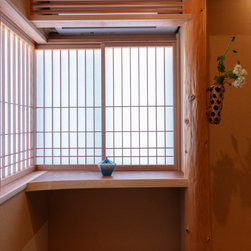
茶室設計のポイントは「素材」と「導線」です。どんな材料で造り、どのように亭主と客が動くのか?この2点を特にイメージして設計することで完成度の高い茶室が生まれます。
限られた予算と空間であればこそ、工夫とアイデアが必要です。一般的な茶室をそのままマンションに入れ込もうとしても無理があり、基本は茶事ができ導線がスムーズに取れることです。厳しい条件であればあるほどアイデアの詰まった唯一無二の茶室が生まれます。
茶道をやっていない方でも、現代のライフスタイルに「茶室」は潤いと安らぎを与えてくれる価値ある空間となると思い伝統と革新をテーマとして日々茶室設計をしております。
Recently, I've been getting more requests for tea rooms from people living in apartments. These days, apartments generally lack Japanese-style rooms, and the so-called 2LDK (two-bedroom, two-bedroom, two-kitchen) configuration with two private rooms and a living/dining/kitchen area is the norm. Even so, those interested in tea have found creative ways to hold tea lessons, such as laying tatami mats in the living room. While they don't necessarily want a full-fledged tea room, they at least want a tranquil Japanese-style room. In apartments, partition walls are easily removed because they don't entangle the structure, but structural pillars and beams cannot be removed, creating design challenges. Beams, in particular, are large and limit ceiling height. However, by taking advantage of this, I can create interesting tea rooms with creative ingenuity, such as irregular 8-tatami or 4.5-tatami rooms, or even designs with a drop ceiling, which is where my skills as a tea room architect shine. lol
The most recent tea room I designed was for a client who absolutely needed an 8-tatami room for lessons.
For teachers considering using a tea room as a practice space, an 8-tatami room is essential. In this case, the entrance hall was large, so I extended the tea room into the hallway, allowing for partial removal of the tatami floor in an emergency. Additionally, as the mizuya has no water supply or drainage, we've designed it so that a drain bucket can be placed under the floor, similar to a standing mizuya.
In a tea room, storing utensils is also important, so all of the tatami mats can be raised to allow for storage under the floor, and as much of the wall space as possible has been made available for storage.
Furthermore, since the ability to hold tea ceremonies is a fundamental part of a tea room, the living room is used as a waiting room, and a path to the seating is secured, via the balcony and through part of the mizuya, which is intended to serve as a roji (green garden).
In the future, it may be possible to create a tsukubasin (bathroom) or a full-fledged roji (green garden) on the balcony.
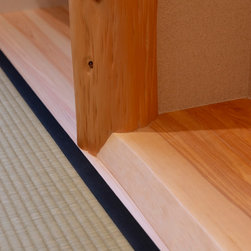
The key to tea room design is "materials" and "pathway." What materials should be used, and how will the host and guests move around? Designing with these two points in mind will result in a highly refined tea room.
Limited budgets and space require ingenuity and creativity. It would be impossible to fit a typical tea room directly into an apartment, so the basic requirement is that the room be able to host tea ceremonies and have a smooth path. The more stringent the conditions, the more unique and ingenious the tea room will be.
Even for those who do not practice the tea ceremony, I believe that a tea room can be a valuable space that brings comfort and relaxation to modern lifestyles, and I design tea rooms every day with tradition and innovation as my theme.
直近で設計した茶室は、お稽古をするのでどうしても8畳の茶室がほしいとの要望でした。
お稽古場として茶室を考えている先生方にはやはり8畳広間が必要です。今回は玄関ホールが広かったので廊下まで茶室を張り出して、緊急時には一部畳床が取り外しできるようにしました。また水屋には給排水がないので、置き水屋的発想で床下に排水桶が置けるようにしております。
茶室の場合、道具の収納も重要ですので、床下は全て畳を上げて収納できるようにし、壁面もできる限り収納としております。
さらに、茶事ができることが茶室の基本でもありますので、リビングを待合にして、バルコニー経由で露地を想定して水屋の一部を通り、席入りの導線も確保しての茶室です。
将来的にはバルコニーにつくばいや本格的な露地を作ることも可能です。
茶室設計のポイントは「素材」と「導線」です。どんな材料で造り、どのように亭主と客が動くのか?この2点を特にイメージして設計することで完成度の高い茶室が生まれます。
限られた予算と空間であればこそ、工夫とアイデアが必要です。一般的な茶室をそのままマンションに入れ込もうとしても無理があり、基本は茶事ができ導線がスムーズに取れることです。厳しい条件であればあるほどアイデアの詰まった唯一無二の茶室が生まれます。
茶道をやっていない方でも、現代のライフスタイルに「茶室」は潤いと安らぎを与えてくれる価値ある空間となると思い伝統と革新をテーマとして日々茶室設計をしております。
Recently, I've been getting more requests for tea rooms from people living in apartments. These days, apartments generally lack Japanese-style rooms, and the so-called 2LDK (two-bedroom, two-bedroom, two-kitchen) configuration with two private rooms and a living/dining/kitchen area is the norm. Even so, those interested in tea have found creative ways to hold tea lessons, such as laying tatami mats in the living room. While they don't necessarily want a full-fledged tea room, they at least want a tranquil Japanese-style room. In apartments, partition walls are easily removed because they don't entangle the structure, but structural pillars and beams cannot be removed, creating design challenges. Beams, in particular, are large and limit ceiling height. However, by taking advantage of this, I can create interesting tea rooms with creative ingenuity, such as irregular 8-tatami or 4.5-tatami rooms, or even designs with a drop ceiling, which is where my skills as a tea room architect shine. lol
The most recent tea room I designed was for a client who absolutely needed an 8-tatami room for lessons.
For teachers considering using a tea room as a practice space, an 8-tatami room is essential. In this case, the entrance hall was large, so I extended the tea room into the hallway, allowing for partial removal of the tatami floor in an emergency. Additionally, as the mizuya has no water supply or drainage, we've designed it so that a drain bucket can be placed under the floor, similar to a standing mizuya.
In a tea room, storing utensils is also important, so all of the tatami mats can be raised to allow for storage under the floor, and as much of the wall space as possible has been made available for storage.
Furthermore, since the ability to hold tea ceremonies is a fundamental part of a tea room, the living room is used as a waiting room, and a path to the seating is secured, via the balcony and through part of the mizuya, which is intended to serve as a roji (green garden).
In the future, it may be possible to create a tsukubasin (bathroom) or a full-fledged roji (green garden) on the balcony.
The key to tea room design is "materials" and "pathway." What materials should be used, and how will the host and guests move around? Designing with these two points in mind will result in a highly refined tea room.
Limited budgets and space require ingenuity and creativity. It would be impossible to fit a typical tea room directly into an apartment, so the basic requirement is that the room be able to host tea ceremonies and have a smooth path. The more stringent the conditions, the more unique and ingenious the tea room will be.
Even for those who do not practice the tea ceremony, I believe that a tea room can be a valuable space that brings comfort and relaxation to modern lifestyles, and I design tea rooms every day with tradition and innovation as my theme.
プロジェクトの竣工年/制作年: 2024
プロジェクトの費用: 500万円以上1,000万円未満
国: 日本